
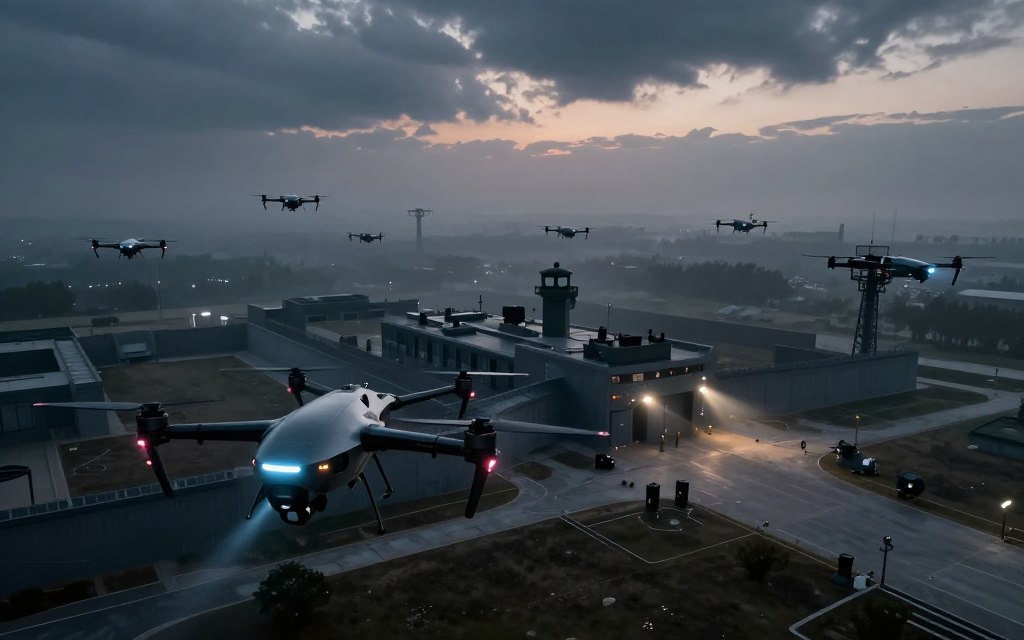
A drone swarm approaching a defended site shows why militaries are exploring directed-energy weapons that stop threats without firing a missile at each one. Interest in these systems is growing as drones become a concern for military bases and other defended sites.
Here, “DEW” means directed-energy weapons, not moisture-harvesting technology or a company name. The systems matter to defense teams that need to protect people, equipment, and information. They can disrupt or damage assets, but they are not a universal replacement for conventional weapons.
This guide explains the basic idea, the main uses, and the limits that shape real missions. The technology can sound simple, but the conditions around a target can change what a system can do. The precise meaning of directed energy starts with how it delivers an effect.
Key Takeaways
- DEWs send energy toward a target instead of launching a physical projectile.
- Different systems affect people, sensors, and equipment in different ways.
- Some systems are still research projects or tested prototypes.
- Weather, distance, power, and safety concerns can limit a mission.
- A tested prototype is not proof of widespread military use.
What Is DEW Technology?
Unlike a missile, a directed-energy system sends electromagnetic energy toward its target instead of transporting an explosive payload. Directed energy means energy is aimed or shaped to cause an effect at a distance.
DEWs deliver energy at the speed of light, but that does not guarantee a hit or instant destruction. Power output means the electromagnetic energy transferred over time. The electromagnetic spectrum is the full range of electromagnetic radiation, classified by wavelength and including visible and invisible light.
Energy reaches the target at the speed of light, but aim and target conditions still matter.
Different wavelengths interact with materials in different ways. Some DEWs use visible light; others use invisible regions of the spectrum. A beam may be narrow and focused, while a broader emission can cover more area. Neither one is a physical projectile.
Technology applies knowledge to practical goals, from physical tools to systems that perform a task. A basic definition of technology helps place DEWs among tools built for a clear purpose.
Related Posts:
- New Tech During the Hundred Years War: What Developed

- What New Technology Developed in the Hundred Years War Era

- Is Metamorph Technologies a Division of Metamorph…

- What Happened to Theranos Technology? The Rise and…

- What is a Tech Hacker Skills and Tools Explained

- What Do You Know About Information Technology: A Guide

The basic path from an energy source to an effect has three steps:
- Produce electromagnetic energy.
- Direct or shape the emission toward a target.
- Cause an effect when the target absorbs or couples with that energy.
“Couples with” means the target takes in the energy in a way that affects it. The result depends on the energy and the material it reaches. The spectrum and beam shape help explain why the main DEW types behave differently.
What Types of Directed-Energy Weapons Exist?
The word “directed energy” covers several technologies, not one interchangeable weapon design. Each type uses a different part of the spectrum or a stream of particles, so its beam interacts with targets in its own way.
Lasers focus energy on a small spot, while some microwave systems can affect several targets across a wider area. The main types include high-energy lasers, millimeter-wave weapons, high-power microwave weapons, and particle-beam weapons.
High-Energy Lasers
A high-energy laser, or HEL, uses visible or infrared light to make a narrow beam. It usually engages one target at a time. Its focused energy heats a small point, which can harm material that absorbs that wavelength well.
For this guide, a high-energy laser has an output of at least 1 kilowatt. A laser can keep its energy on one area rather than spreading it across a broad field. That focus can suit a specific target, such as a sensor or part of a vehicle.
Millimeter-Wave Weapons
Millimeter-wave weapons use wavelengths between 1 and 10 millimeters and generate more than 1 kilowatt. Their waves can interact with a wider area than a narrow laser beam. Some systems can affect multiple targets at once.
These weapons can also act on people. The effect depends on how the energy reaches the body and the system’s intended use. Millimeter waves are a separate part of the spectrum from visible and infrared laser light.
High-Power Microwave Weapons
High-power microwave weapons, or HPM systems, use longer wavelengths than HELs and millimeter-wave systems. They can produce more than 100 megawatts. Their energy can couple with electronic systems, disrupting or damaging their operation.
HPM systems may use a wider beam to affect several electronic targets in an area. That can matter when many devices are close together. The Navy’s HPM research program describes work on beam steering, waveforms, and effects on electronics.
Particle-Beam Weapons
Particle-beam weapons direct a stream of particles toward a target instead of using light or radio-frequency energy. They are described as having strong penetration and potential for use in different weather conditions.
The technology remains extremely complex. That makes particle beams a challenging research area, not a routine battlefield capability. Their possible traits should not be confused with proof that a field-ready system exists.
The four types differ in how they shape energy and interact with a target. With the main types in view, their effects can range from temporary disruption to physical damage.
How Do DEW Systems Affect Different Targets?
A directed-energy system may warn, disrupt, or physically damage a target, depending on how it is used. The effect can be temporary or lasting, and a system’s aim and exposure time help shape it.
Denial, dazzling, and physical damage are distinct outcomes, not interchangeable labels. The Department of Defense’s Active Denial System uses millimeter waves that interact with water and fat molecules in skin, creating a heating sensation.
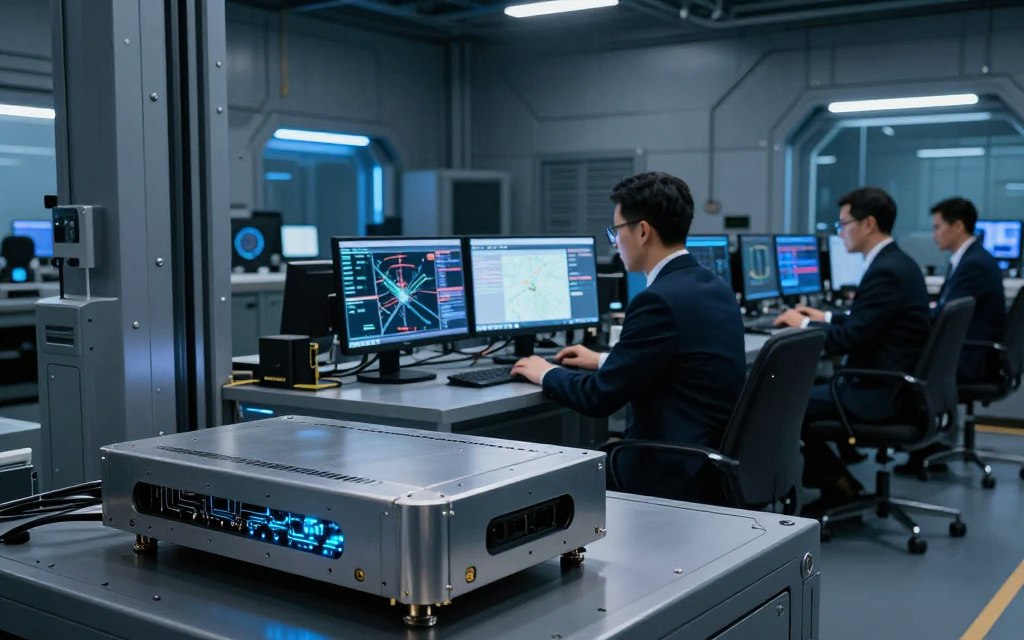
During testing, the discomfort persuaded people to move away from the area. That is an example of area denial, where a system aims to make a place hard to enter or occupy. Laser dazzling works differently: it can temporarily overwhelm a person’s or sensor’s ability to see or sense.
Temporary Denial and Sensor Disruption
A temporary effect can stop a person or sensor from acting as intended without destroying the target. A laser aimed at a sensor, for example, can interfere with its ability to detect or track. The effect may end when the exposure stops.
Damage and Destruction
A laser can heat and melt material that absorbs its wavelength effectively. A focused beam may target a sensor, battery, or fuel tank. Damage depends on the time on target, distance, and the part of the target receiving the focused energy.
| Targeting factor | How it changes the effect | Practical implication |
|---|---|---|
| Time on target | Longer exposure can add heat | A moving target may be harder to affect |
| Distance to target | Greater distance can weaken the effect | Closer targets can be easier to engage |
| Point of focus | A small area receives more focused energy | A sensor or battery may be targeted directly |
These adjustable effects explain the appeal of DEWs, while their current deployment depends on how far development has progressed.
Where Are DEWs in Use and Development?
A prototype that has been tested is not the same thing as a weapon fielded widely across the military. Development can mean anything from early research to a prototype tested in the field.
The U.S. military has tested DEW prototypes since 2014, mainly for counter-drone missions. Moving from development to acquisition is a separate step, and turning prototypes into widely used systems remains difficult.
These milestones show the range of work underway:
- U.S. military prototype testing has taken place since 2014.
- The Tactical High Power Microwave Operational Responder, or THOR, completed two years of testing.
- In 2021, the U.S. and 30 other nations were developing DEWs, most for counter-drone missions.
Testing can show whether a system works in a set trial. It does not prove that the system is ready for regular missions or has been acquired across the military. Research and fielding are different stages.
Directed-energy research also includes space applications, such as spacecraft propulsion, satellite interception, and efforts to deflect comets or asteroids. These research goals do not establish that satellite-mounted weapons are operational.
DEWs range from research projects to prototypes tested in the field, with counter-drone work a leading military focus. The gap between promise and routine use becomes clearer when the advantages are weighed against practical limits.
What Benefits and Limits Shape Their Use?
A DEW can be attractive when a defender needs repeated engagements, but mission conditions determine whether it is practical. Speed and the chance of a lower cost per shot can help, especially when a system has steady power.
Power and cooling needs, weather, distance, and beam coverage can limit a system’s use. Lasers can lose performance in fog or storms, and DEWs generally become less effective at greater distances.
A low cost per shot does not make a system practical when weather, range, or cooling limits the mission.
Some systems can keep firing while power is available, but that still requires a power supply and cooling. HPM systems have shorter range than HELs, yet they can affect a wider area and are described as not weather-affected.
A broad beam can reach friendly and hostile assets in the same area. That risk matters when a mission takes place near other forces or equipment. The table compares key trade-offs.
| Factor | Potential advantage | Limit or trade-off |
|---|---|---|
| Engagement speed | Energy arrives at light speed | A fast beam does not guarantee a hit |
| Cost per shot | Can cost less than a missile | Power and cooling still add demands |
| Firing capacity | Can fire while power remains | Cooling can limit sustained use |
| Weather and distance | HPM is described as weather-resistant | Fog, storms, and range can limit lasers |
| Beam coverage | Wide beams can affect several targets | Friendly assets may share the same area |
Long-term health effects from exposure remain unclear. International laws and guidelines also do not always clearly define how every use applies, so both issues matter when a mission involves people.
Directed-energy weapons can complement conventional arms when their strengths fit the mission. Their limits make them mission-specific tools, so readers should check the target, conditions, and fielding status of any claim.
Conclusion
Directed-energy weapons are best understood as specialized tools rather than all-purpose replacements for conventional weapons. They offer fast engagement and adjustable effects, but range, weather, power, and exposure concerns still shape their use.
The right system depends on its target and the conditions around it. A laser that can focus on equipment may not suit a stormy or distant engagement. A broad microwave beam may reach more electronics, but could affect nearby friendly assets.
When evaluating a claim, check what the system targets and the conditions it can handle. Then check its fielding status: is it a research project, a tested prototype, or an operational capability?
