
Assisted Reproductive Technology (ART) encompasses a range of medical procedures designed to help individuals and couples overcome infertility challenges. According to the American Center for Disease Control (CDC), ART involves fertility-related treatments where eggs or embryos are manipulated.
The significance of ART in modern reproductive medicine cannot be overstated, as it aids in achieving pregnancy conception in individuals facing difficulties. Various ART procedures are available, including In Vitro Fertilization (IVF), which involves the collection of oocytes, fertilization in vitro, and embryo transfer into the uterus.
This discussion overlaps with format hard drive command, especially for readers comparing assisted reproductive with similar issues.
ART is not only used for addressing infertility but also for preimplantation genetic testing, fertility preservation, and delaying childbearing. By understanding the options available through ART, individuals can make informed decisions about their reproductive health.
Understanding Assisted Reproductive Technology (ART)
The term Assisted Reproductive Technology encompasses a range of medical procedures designed to assist individuals and couples in conceiving. ART has become a vital component in the treatment of infertility, offering hope to those who struggle to conceive naturally.
Definition and Purpose of ART
Assisted Reproductive Technology (ART) refers to medical procedures that manipulate eggs, sperm, or embryos to establish a pregnancy. The primary purpose of ART is to help individuals and couples overcome various fertility barriers, including medical conditions, age-related factors, and unexplained infertility. ART treatments include procedures such as in vitro fertilization (IVF) and intracytoplasmic sperm injection (ICSI), among others.
| ART Procedure | Description |
|---|---|
| In Vitro Fertilization (IVF) | A process where an egg is fertilized with sperm outside the body. |
| Intracytoplasmic Sperm Injection (ICSI) | A procedure where a single sperm is injected into an egg. |
Historical Development of Reproductive Technologies
The origins of ART date back to the late 20th century, with the first major breakthrough occurring in 1978 with the birth of Louise Brown, the world’s first IVF baby. Since then, reproductive technologies have evolved significantly, with advancements in research and technology improving the effectiveness and accessibility of ART procedures. Today, ART is a mainstream medical treatment, helping millions worldwide.
What is Assisted Reproductive Technology: Core Concepts
Understanding Assisted Reproductive Technology requires delving into its scientific foundations and the diverse groups it benefits. Assisted Reproductive Technology (ART) is a sophisticated medical field that has revolutionized the treatment of infertility.
Related Posts:
- Discover What is Assistive Technology and Its Benefits

- Exploring the Ethical Issues of Biometric Technology

- Exploring What is Technology: Its Meaning & Impact

- Is Metamorph Technologies a Division of Metamorph…

- Learn What is the Information and Communication Technology

- What Helped Western European Nations Develop Better…

The Science Behind ART
The science behind Assisted Reproductive Technology involves manipulating reproductive cells to create viable embryos outside the human body. This process includes gametogenesis, the production of eggs and sperm, and understanding fertilization mechanisms and early embryonic development. According to recent studies, the success of ART depends on various factors, including the quality of the reproductive cells and the precision of the laboratory procedures. As stated by a leading fertility specialist, “The advancements in ART have been remarkable, allowing us to better understand and address various infertility issues.”
“The ability to manipulate reproductive cells has opened new avenues for treating infertility.”

Who Benefits from ART Treatments
ART treatments benefit a diverse range of individuals, including couples struggling with infertility, single parents, same-sex couples, and those with genetic conditions. Specific medical conditions that commonly lead to ART treatment include blocked fallopian tubes, low sperm count or quality, ovulation disorders, endometriosis, and unexplained infertility. As the CDC reports, approximately 2.3% of all infants born in the United States are conceived using ART, highlighting its growing importance in family-building options. The ART process is tailored to individual health factors, diagnoses, and family-building goals, representing a range of options rather than a one-size-fits-all approach.
Major Types of Assisted Reproductive Technology
The field of Assisted Reproductive Technology (ART) offers multiple treatment options for fertility issues. ART procedures have revolutionized the way we approach infertility, providing hope to many individuals and couples.
In Vitro Fertilization (IVF)
In Vitro Fertilization (IVF) is the most common and effective ART procedure, accounting for 99% of all ART treatments. IVF involves stimulating the ovaries to produce eggs, which are then retrieved and fertilized in a laboratory. The resulting embryos are transferred to the uterus via an embryo transfer procedure. IVF is a versatile treatment that can address various fertility challenges, including tubal damage, male factor infertility, and unexplained infertility.
Intracytoplasmic Sperm Injection (ICSI)
Intracytoplasmic Sperm Injection (ICSI) is a specialized technique often used in conjunction with IVF. It involves injecting a single sperm directly into an egg to facilitate fertilization. ICSI is particularly useful for addressing severe male factor infertility, where sperm count or motility is significantly impaired. This technique has significantly improved the chances of successful fertilization in such cases.
Frozen Embryo Transfer (FET)
Frozen Embryo Transfer (FET) involves thawing cryopreserved embryos from previous IVF cycles and transferring them to the uterus. FET offers several advantages, including improved endometrial receptivity and the ability to delay transfers for optimal timing. Recent studies have shown that FET has a significant success rate, with about 52% of FET procedures resulting in ongoing pregnancies.
Intrafallopian Transfer Techniques
Intrafallopian Transfer Techniques, including Gamete Intrafallopian Transfer (GIFT) and Zygote Intrafallopian Transfer (ZIFT), involve placing eggs and sperm or early embryos directly into the fallopian tubes. These procedures differ from standard IVF by allowing fertilization to occur naturally within the body. While less common today, these techniques were once popular alternatives to traditional IVF.
Each of these ART procedures has its own applications, success rates, and suitability for different fertility challenges. Understanding the differences between them can help individuals and couples make informed decisions about their fertility treatment options.
The ART Process Explained
For many, the ART process is a carefully planned and monitored series of procedures. This process is tailored to the individual’s or couple’s specific needs, aiming to achieve a successful pregnancy.
Ovarian Stimulation and Monitoring
The ART process begins with ovarian stimulation, where medications are administered via injection to stimulate the ovaries to produce multiple mature eggs. This process is closely monitored through transvaginal ultrasound and blood tests to assess follicle growth and estrogen production.

Egg Retrieval Procedure
Egg retrieval is a minimally invasive procedure performed under mild sedation and pain relief. An ultrasound probe is used to visualize the ovaries, and a needle is inserted through the vaginal wall to aspirate the eggs from the follicles.
Fertilization Methods
Fertilization can occur through conventional insemination, where eggs and sperm are combined in a laboratory dish, or through intracytoplasmic sperm injection (ICSI), where a single sperm is injected into an egg.
Embryo Transfer and Implantation
The final step involves transferring the selected embryo(s) into the uterus using a thin catheter. The embryo is expected to implant into the uterine lining 6 to 10 days after retrieval.
| ART Process Step | Description | Timeline |
|---|---|---|
| Ovarian Stimulation | Medication to stimulate multiple egg production | 8-14 days |
| Egg Retrieval | Minimally invasive procedure to collect eggs | 30 minutes |
| Fertilization | Conventional insemination or ICSI | 1 day |
| Embryo Transfer | Transferring embryo(s) into the uterus | Variable |
Third-Party Assisted Reproductive Options
For individuals or couples struggling with infertility, third-party assisted reproductive options offer an alternative pathway to parenthood. These options are considered when traditional assisted reproductive technology (ART) methods are not successful.
Sperm and Egg Donation
Sperm and egg donation are vital components of third-party assisted reproduction. Sperm donation is an option for men who do not produce sperm or have a genetic disease, while egg donation helps women who do not produce healthy eggs. Donated sperm or eggs can be used in various ART procedures, including intrauterine insemination (IUI) and in vitro fertilization (IVF). The screening process for donors is rigorous, involving medical and psychological evaluations to ensure the health and well-being of the resulting child.

Surrogacy and Gestational Carriers
Surrogacy and gestational carriers provide an option for women who are unable to carry a pregnancy. A surrogate is a woman who is inseminated with sperm from the male partner, while a gestational carrier is implanted with an embryo created from another woman’s egg. Both arrangements involve complex medical, legal, and emotional considerations.
Embryo Donation
Embryo donation, also known as embryo adoption, allows couples who have completed their families through IVF to donate their remaining frozen embryos to others. This option provides a chance for the recipient to experience pregnancy and give birth to their adopted baby.
Success Rates and Factors Affecting ART Outcomes
ART success rates are influenced by multiple factors, including age, health conditions, and lifestyle choices. Understanding these elements is crucial for individuals considering ART treatments.
Understanding Success Rate Statistics
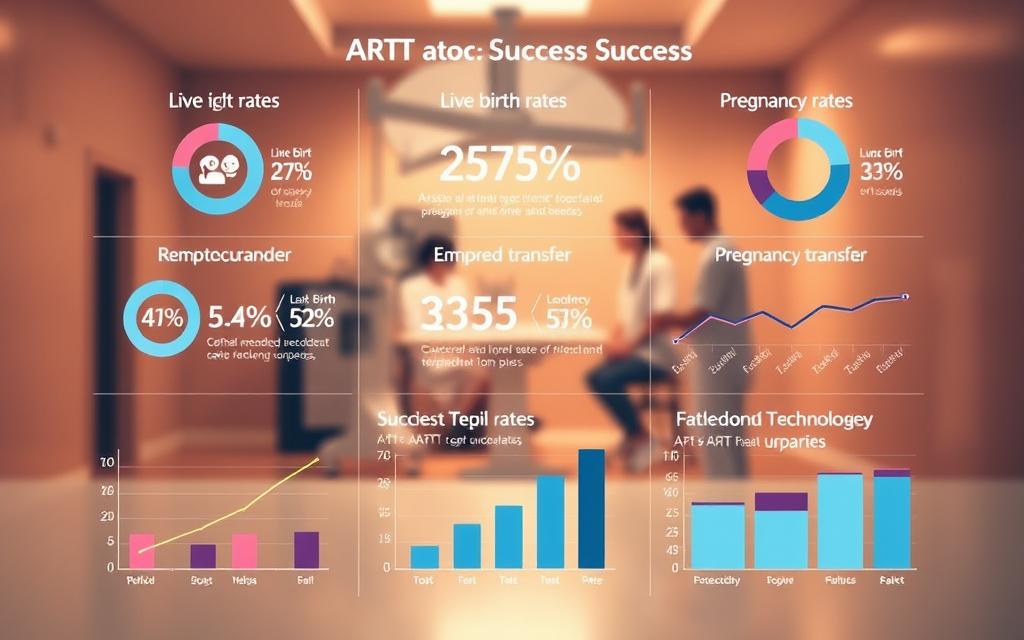
Success rate statistics for ART can be complex, involving pregnancy rates, live birth rates, and cumulative success rates across multiple cycles. It’s essential to understand the difference between these metrics to have a realistic expectation of treatment outcomes.
Age and Its Impact on ART Success
Age is a significant factor affecting ART success rates. Younger patients generally have higher success rates due to better egg quality and overall reproductive health. The table below illustrates the impact of age on ART success rates.
| Age Group | Success Rate |
|---|---|
| Under 35 | 35% |
| 35-40 | 25% |
| 41-42 | 15% |
Health Conditions and Lifestyle Factors
Underlying health conditions, such as polycystic ovary syndrome (PCOS) or endometriosis, can impact ART success rates. Additionally, lifestyle factors like maintaining a balanced diet, regular exercise, and avoiding smoking can positively affect outcomes.
Personalized Care and Treatment Approaches
Personalized care can significantly improve ART outcomes by creating individualized treatment plans tailored to the specific needs and circumstances of each patient. Fertility specialists adjust medication dosages, laboratory techniques, and transfer strategies to maximize chances of pregnancy.
Conclusion: The Future of Assisted Reproductive Technology
With ongoing research and technological breakthroughs, the field of Assisted Reproductive Technology (ART) is poised to make significant strides in addressing infertility and promoting reproductive health. Advances in IVF and other fertility treatments are improving success rates and offering new hope to individuals and families.
As ART continues to evolve, it is crucial to address ongoing ethical considerations and policy developments surrounding access, affordability, and regulation. The future of fertility care lies in increasingly tailored approaches that consider each individual’s unique reproductive health profile, ensuring personalized treatment and care.
FAQ
What does ART treatment involve?
ART treatment typically involves several steps, including ovarian stimulation, egg retrieval, fertilization, and embryo transfer. The specific procedures may vary depending on the type of ART treatment chosen.
How is IVF different from ICSI?
IVF involves fertilizing an egg with sperm in a laboratory dish, while ICSI involves injecting a single sperm directly into an egg. ICSI is often used when there are severe male infertility issues.
What is the role of ovarian stimulation in ART?
Ovarian stimulation is used to stimulate the ovaries to produce multiple eggs, increasing the chances of obtaining healthy eggs for fertilization.
Can ART help women with poor egg quality or quantity?
Yes, ART treatments like egg donation can help women with poor egg quality or quantity. Egg donation involves using eggs from a donor, which are then fertilized and transferred to the intended mother’s uterus.
How do health conditions affect ART success rates?
Certain health conditions, such as polycystic ovary syndrome (PCOS) or endometriosis, can impact ART success rates. However, personalized care and treatment approaches can help mitigate these effects.
What is the significance of age in ART success?
Age is a significant factor in ART success, as egg quality and quantity decline with age. Women under 35 tend to have higher success rates with ART treatments.
Can ART be used for same-sex couples or single individuals?
Yes, ART treatments can be used by same-sex couples or single individuals. Options like sperm or egg donation, as well as surrogacy, can help these individuals or couples build their families.
What are the risks associated with ART treatments?
While generally safe, ART treatments carry some risks, such as ovarian hyperstimulation syndrome (OHSS) or multiple pregnancies. However, these risks can be minimized with proper care and monitoring.
