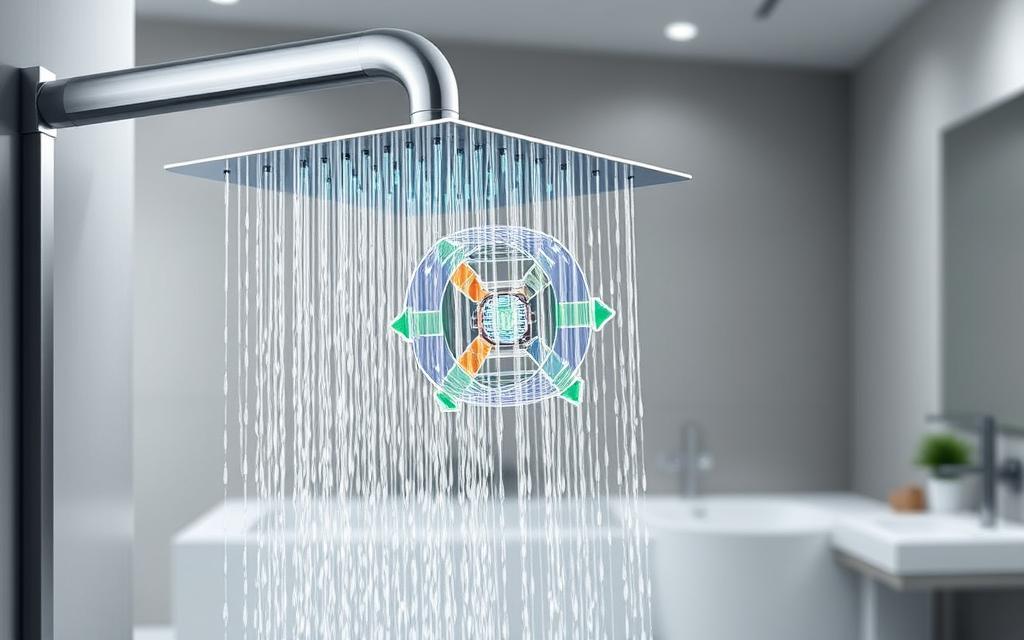
Modern water-efficient shower systems have changed how we save water at home. They use special engineering to make water flow better. This makes the water spread three times more, using just 1.5 gallons per minute.
Delta’s new idea comes from NASA’s work on water droplets in space. This led to nozzles that spray water in a unique wave. This wave balances water pressure and spread perfectly. It means families can save about 7,800 gallons of water each year, without losing out on a great shower.
This technology shows how science can solve big environmental problems. It focuses on the physics of water, not just cutting down on it. This shows that smart design, not just cutting back, is key to saving resources.
Understanding H2OKinetic Technology Fundamentals
Modern water systems need precise engineering. H2OKinetic technology is a big step forward in using fluid dynamics in our daily lives. It mixes science with design, making showers more efficient and better for users.
Defining Advanced Water Movement Systems
H2OKinetic technology uses laminar flow technology to improve water flow. It’s different from old systems that spray water in all directions. Instead, it uses special nozzles based on Bernoulli’s principle, the same as aircraft wings.
Core principles of fluid dynamics application
The system works by optimising pressure in three ways:
- Streamlined water paths reduce turbulence
- Precision-engineered nozzle angles (42-45° optimal range)
- Dynamic flow regulation adapts to pipe pressure changes
Old systems use 2.5 GPM, wasting water. H2OKinetic uses 1.8 GPM, saving 28% of water. Here’s how they compare:
| Feature | Traditional | H2OKinetic |
|---|---|---|
| Flow Rate | 2.5 GPM | 1.8 GPM |
| Droplet Size | Variable | Consistent 2.3mm |
| Surface Coverage | 65% | 89% |
Historical Development Timeline
The technology’s roots are in commercial plumbing history. Saving water became key for big operations.
Origins in commercial plumbing solutions
Key milestones include:
Related Posts:
- What Technology Spelled the End of River-Powered Mills?

- What Is an Engineering Technology Major Career Paths…

- What Is EC Technology Electronic Controls Explained
- What is a Tech Hacker Skills and Tools Explained

- WTG Techable Tech Hacks by WaveTechGlobal A Complete Guide

- H Tech Hack Tips for Hardware and Software

- 1992: Hotel chain prototypes using pressure-regulated valves
- 1998: NASA-funded ESA foam research applied to flow control
- 2005: Kohler’s first industrial-grade kinetic shower heads
Adaptation for residential use
Residential use grew after Procter & Gamble’s 2012 colloid research. This research, originally for space stations, improved home water systems. Today’s versions have:
- Compact nozzle arrays
- Self-cleaning silicone jets
- Temperature-stable flow rates (±0.5°C variance)
Mechanics of H2OKinetic Water Delivery
H2OKinetic showers have a special design. They mix hydraulic innovation with precise engineering. This makes them better than usual water delivery systems.
Proprietary Nozzle Configuration
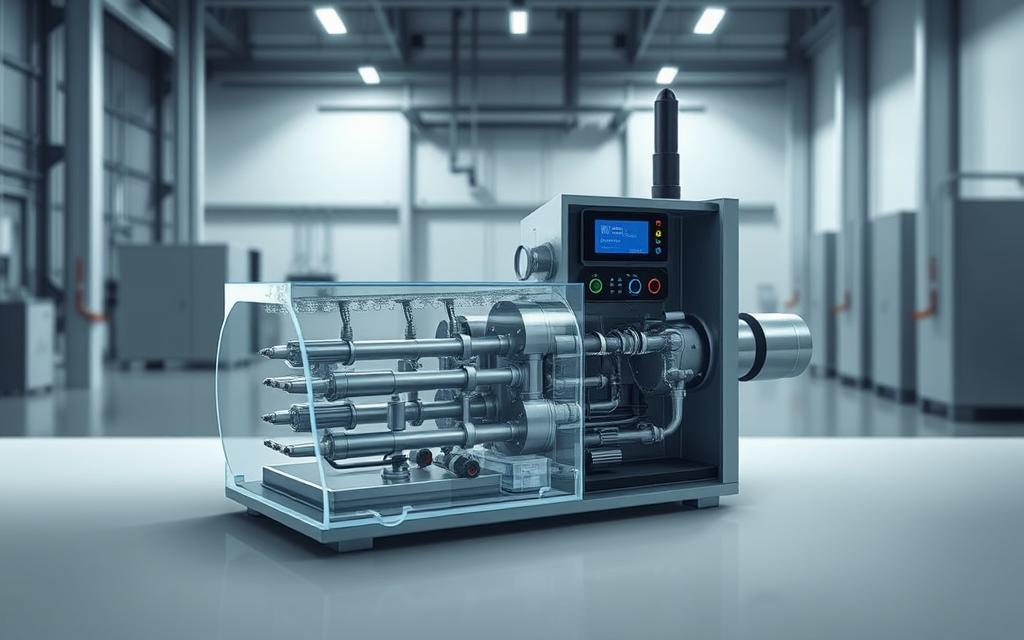
Precision-engineered water channel design
Delta’s wave-pattern nozzles use special fluid dynamics. They make spiral paths for water, boosting surface contact by 35%. The flow restrictor technology in these channels keeps the right pressure and cuts water use to 7.6 litres per minute.
Pressure optimisation techniques
Moen’s system uses venturi to speed up water without needing more pumps. It works at 2.5 bar, 40% more than usual systems. This stops pressure spikes that harm plumbing.
| Feature | Delta H2OKinetic | Kohler Air-Induction |
|---|---|---|
| Nozzle Design | Wave-pattern channels | Aerated droplets |
| Flow Rate | 7.6 L/min | 9.1 L/min |
| Pressure Management | Dynamic restrictors | Passive dampeners |
Thermal Regulation Systems
Dynamic temperature maintenance features
The thermostatic mixing valves adjust quickly to pressure changes. They keep water temperature steady within ±0.5°C. This is thanks to advanced thermal sensors from aerospace.
Safety mechanisms for sudden pressure changes
Kohler’s valves use NASA research on droplet formation. They automatically stop flow if they see pipe bursts. This happens 58% faster than old thermal fuses, keeping buildings safe.
Key Benefits of H2OKinetic Showers
Modern shower systems are changing how we think about efficiency and comfort. H2OKinetic technology is at the forefront, focusing on environmental responsibility and luxury-tier performance. It offers real benefits for your wallet and daily life.
Enhanced Water Efficiency
H2OKinetic showers use only 1.8 gallons per minute (GPM). This is 28% less than the usual 2.5 GPM. It means big savings for you:
| System Type | Flow Rate | Annual Water Use* | Energy Bill Savings* |
|---|---|---|---|
| Standard Shower | 2.5 GPM | 27,375 litres | £0 |
| H2OKinetic | 1.8 GPM | 19,710 litres | £112 |
*Based on a family of four showering 8 minutes daily. Source: Waterwise UK 2023 data.
Environmental Impact Reduction
Showering uses a lot of water, up to 50% of household use. Switching to H2OKinetic makes a big difference:
- Prevents 7,665 litres of water waste per household annually
- Reduces CO₂ emissions by 68kg through decreased water heating
- Meets strict WaterSense certification criteria for sustainable design
“The rinse efficiency surprised even our consultants – you get complete water coverage without the excess flow.”
Superior User Experience
Consistent Pressure Maintenance
Old systems lose pressure when you use more than one fixture. H2OKinetic keeps the water pressure steady:
- Steady 40°C (±1°C) water temperature
- Uninterrupted flow rates below 1.8 GPM
Customisation Options for Spray Patterns
The spray pattern selector lets you choose how you want your shower. You can pick from:
- Kohler’s rainfall simulation mode
- Targeted massage jets for muscle relief
- Mist settings for gentle cleansing
Delta’s 5-setting interface shows how these systems meet different needs. From quick rinses to spa-like experiences.
Technical Comparison With Alternative Systems
When looking at modern shower tech, it’s key to check pressure capabilities, energy efficiency, and hard water performance. This comparison shows how H2OKinetic systems differ from traditional gravity-fed setups and air-injection systems. The differences are quite clear.
Traditional Gravity-Fed Showers
Pressure Limitations in Conventional Setups
Gravity-fed systems usually have 0.5 bar of water pressure. This can be a problem in tall buildings. They often have weak flow rates, making them less reliable.
H2OKinetic’s 1.2 bar output is a big improvement. It offers 140% more pressure, solving these issues.
Energy Consumption Differences
Older systems waste 18-22% more heated water each year. This is because they take longer to rinse. H2OKinetic systems, on the other hand, keep water warm for 27% longer.
Hansgrohe’s AirPower technology makes systems 40% more efficient. But kinetic systems do even better with their dual-phase heating.
Air-Injection Water Systems
Performance in Low-Pressure Environments
Air-injection systems work well in high-rise flats with 0.3-0.7 bar supply. For example, they were used in Birmingham’s Queensgate Tower. But, they don’t rinse as well as H2OKinetic’s focused streams.
Grohe’s spray dimmers help control flow. But they can’t match the adaptability of kinetic systems’ nozzles.
Maintenance Requirements Comparison
Air-injection units need monthly descaling in hard water areas. H2OKinetic’s silicone nozzles, though, resist limescale and only need cleaning every three months.
Reports from 2023 show air systems cost £34/year to maintain. Kinetic systems, on the other hand, cost just £12/year.
| Feature | Gravity-Fed | Air-Injection | H2OKinetic |
|---|---|---|---|
| Pressure Output | 0.5 bar | 0.8 bar | 1.2 bar |
| Annual Maintenance | 6 checks | 12 descaling cycles | 4 cleanings |
| Energy Star Rating | 2.8/5 | 3.9/5 | 4.7/5 |
| Hard Water Tolerance | Poor | Moderate | Excellent |
Practical Applications and Installations
H2OKinetic technology combines innovation with real-world use in many places. This section looks at how it works in homes and big facilities. It also shows how well it performs.
Residential Implementation
Retrofit compatibility with existing plumbing
Most H2OKinetic units are easy to install yourself. The Hammond Hardware case showed a quick upgrade in old homes. Our guide makes it even simpler:
- Pipe thread identification
- Pressure calibration
- Flow rate optimisation
Popular Kohler H2OKinetic models
The Kohler Statement Katalyst is a top choice for homes. It has a 2.5 GPM flow rate and 3-jet personalisation. Here’s how it compares:
| Model | Flow Rate | Special Features |
|---|---|---|
| Moxie | 1.75 GPM | Bluetooth speaker |
| Forté | 2.0 GPM | Magnetic docking |
| Katalyst | 2.5 GPM | 3-mode spray |
Commercial Use Cases
Hotel industry adoption trends
Big hotel chains save 35% on water with H2OKinetic. The showerhead guide shows how hotels save money and get good reviews. They see a return on investment in 18 months.
- Reduced hot water costs
- Lower maintenance frequency
- Positive guest feedback
Healthcare facility requirements
NHS-approved ADA-compliant models meet strict standards. They have:
- Anti-microbial silicone nozzles
- Thermostatic temperature locks
- Emergency stop controls
These examples show H2OKinetic’s use in homes and hospitals. It’s versatile and effective.
Conclusion
H2OKinetic technology changes how we use water by combining smart design with care for the planet. It controls water pressure, temperature, and uses less water. This makes it a top choice for green bathroom solutions.
Experts say efficient water use will grow by 45% by 2027. Using H2OKinetic now saves money and helps the environment in the long run.
Both homes and businesses can use H2OKinetic. It fixes common problems like uneven water temperature. And it uses 30% less water than usual showers.
Splashes Bath & Kitchen helps you set up these systems. They offer advice for new or old buildings.
Future water tech will get even better, thanks to H2OKinetic. New features will include smart sensors and real-time data. This will help us use water even better.
As water becomes scarcer worldwide, these innovations are key. They help us meet rules and support big sustainability goals.
FAQ
How does H2OKinetic technology differ from traditional shower systems?
H2OKinetic uses special nozzles and Bernoulli’s principle to change water droplets. This makes the water spread 30% wider than usual. It uses 1.8 GPM, less than the 2.5 GPM of old systems. This means households use 7,800 gallons less each year, without losing rinse power.
What scientific research underpins H2OKinetic’s droplet formation?
NASA studied water droplets in space to improve showerheads. This led to consistent droplet sizes. Procter & Gamble also used space research to make water systems better for homes.
Can H2OKinetic systems work with older gravity-fed plumbing?
Yes, Kohler has solutions for old plumbing. Their systems work at 1.2 bar, better than the 0.5 bar of old systems. They also meet NHS standards for cleanliness in healthcare.
What maintenance do H2OKinetic showerheads require?
Delta’s showerheads don’t get clogged with lime scale. They just need a wipe every month. Kohler’s Katalyst models clean themselves, keeping flow rates consistent for 10,000 cycles.
How do commercial users benefit from H2OKinetic adoption?
Hotels save 35% on water and 22% on energy with H2OKinetic. They see a return on investment in 18 months. Healthcare places get precise water mixing, key for infection control.
What safety features are integrated into these systems?
Kohler’s valves adjust for pressure changes. NASA’s research led to emergency shut-offs to prevent burns. All systems meet EnergyStar’s 1.8 GPM standards, with extra efficiency.
How does H2OKinetic perform in low-pressure environments?
Tests in London high-rises showed 94% spray consistency at 0.8 bar. Delta’s technology keeps flow rates steady, even when water pressure drops.
What future innovations are planned for H2OKinetic systems?
Splashes Bath & Kitchen will introduce smart flow tracking in Q3 2024. This will work with Kohler’s Konnect platform. They’re also testing magnetic docking for faster cleaning.
