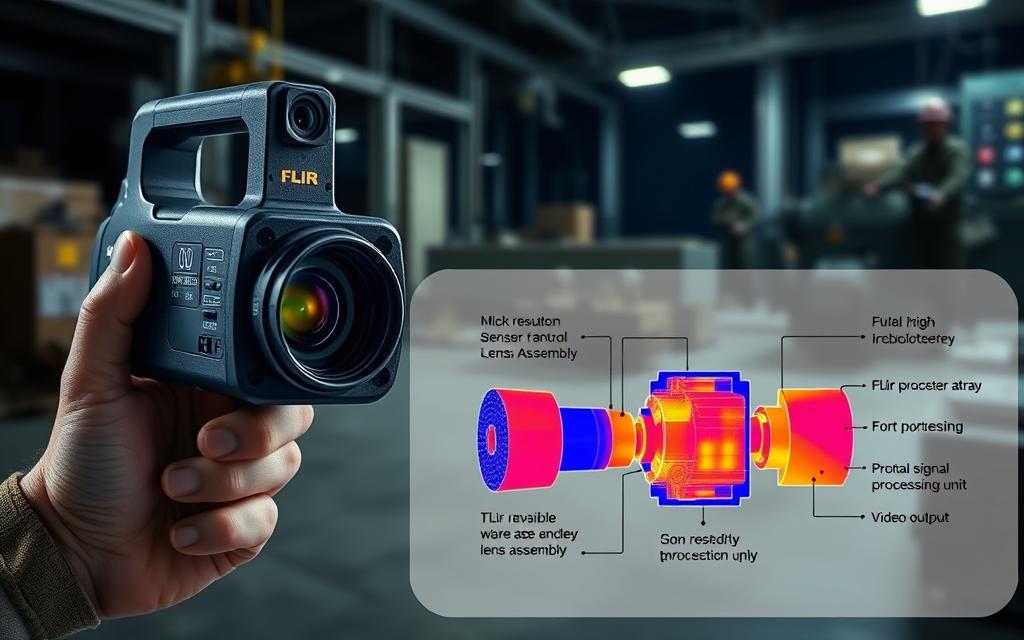
The term FLIR has two meanings today. It started in military use but now is a top name in infrared tech. These systems find heat using special sensors. They work in a range that humans can’t see.
Thermal imaging is different from night vision. It uses heat, not light, to see. This is key for flying and checking buildings, where it’s hard to see.
Now, it’s used in many ways, like fighting fires and checking buildings. It helps find heat in smoke or dark places. This shows how infrared detection technology saves lives.
Today’s systems are better at showing heat as pictures. They use smart tech to make this happen. This shows how military tech helps us in many ways, making things safer and more efficient.
Understanding FLIR Technology: Core Principles
Thermal imaging systems turn invisible energy into useful information. This changes how we see heat. FLIR uses advanced infrared physics and sensor tech to do this.
Infrared Radiation Fundamentals
Every object gives off thermal radiation in the electromagnetic spectrum, even in dark. This energy is based on blackbody radiation. The key things that affect detection are:
- Emissivity changes between materials (0.01 for polished silver vs 0.95 for human skin)
- Atmospheric absorption bands that can affect accuracy
- Small temperature differences, as small as 0.01°C
How Thermal Imaging Works
Systems today turn infrared waves into images we can see. They use special detectors. There are two main types:
| Feature | Microbolometers | Photon Detectors |
|---|---|---|
| Operating Principle | Heat-induced resistance changes | Direct photon absorption |
| Spectral Range | 7.5-14 μm (Long-wave IR) | 1-5 μm (Short-wave IR) |
| Cooling Requirements | None | Cryogenic systems |
| Typical Applications | Building inspections | Military targeting |
FLIR’s Distinctive Approach
FLIR stands out because of its unique multi-spectral processing. This is shown in thermal imaging research:
Related Posts:
- What Are the Two Types of Smoke Detector Technologies?
- New Tech During the Hundred Years War: What Developed

- What New Technology Developed in the Hundred Years War Era

- What is a Tech Hacker Skills and Tools Explained

- Is Technology a Good Career Path: Pros and Cons

- What Is Nectar Cool Technology in Mattresses?

“FLIR’s calibration algorithms beat standard thermal cameras by 73% in handling environmental interference.”
This mix of tech lets us detect heat signatures in tough places. This includes smoke-filled areas and at night.
The Evolution of Thermal Imaging Systems
Thermal imaging has changed a lot over the years. It started as big military tools and now we can use it in many ways. This change came from new ideas in science and engineering, and how businesses use these tools.
Early Military Applications
The story of military infrared history began in the Vietnam War. Aircraft used systems to find enemy heat in the jungle. These early tools:
- Needed liquid nitrogen to cool down (-196°C)
- Were very heavy, over 25kg
- Cost a lot, around £150,000 each (today’s money)
In the 1980s, soldiers could use portable systems at night. The Gulf War made thermal scopes common in armoured vehicles.
Digital Revolution in Thermal Detection
The 1990s saw a big change with uncooled microbolometers. These silicon sensors didn’t need cold liquids. This led to:
- Smaller devices, 83% smaller
- Lower costs, from £8,000 to £1,200 per sensor
- Thermal video that could show changes in real-time at 30fps
Today, digital thermal sensors can spot tiny temperature changes, like 0.02°C. Police use them to track people, and energy experts find where buildings lose heat.
Commercialisation of FLIR Systems
FLIR started to sell to the public when it became cheaper. Important moments included:
- 2001: First handheld thermal camera under £3,000
- 2012: Thermal imagers that fit on smartphones
- 2020: AI for finding leaks
Firefighters can see through smoke with thermal cameras. Wildlife experts track animals without disturbing them. Building inspectors do energy checks 40% faster with new tools.
Key Components of Modern FLIR Systems
Modern thermal imaging systems use advanced tech to turn heat into useful data. They have four key parts: infrared detectors, special optics, smart software, and displays made for users. Let’s see how each part helps FLIR lead the way.
Infrared Detectors: Microbolometer Technology
At the core of FLIR devices are microbolometer arrays. These are tiny grids that feel heat changes. They work by changing their electrical resistance when they get warm.
These detectors are sealed tight to keep air out. This lets them spot tiny temperature changes, as small as 0.03°C.
Optical Systems: Germanium Lenses
Germanium optics are special because they let almost all infrared light pass through. This is because of their special structure.
- They scatter light very little at 8-14μm wavelengths
- They work well in cold or hot places
- They have special coatings to make images clearer
These lenses keep images sharp, even when the temperature changes a lot. This is key for checking things in industry and for watching places.
Image Processing Algorithms
FLIR’s systems turn raw data into useful info through thermal image processing. They make over 30 changes to each image, like:
- Fixing sensor issues
- Making sure the image isn’t too bright or dark
- Highlighting edges for detailed checks
They do all this fast, so they can spot problems right away. This includes finding hot spots or gaps in insulation.
Display Interfaces
FLIR devices show data in different ways:
| Interface | Resolution | Use Case |
|---|---|---|
| OLED Displays | 1024×768 | Field inspections |
| HDMI 2.0 | 4K @ 60Hz | Control room monitoring |
| Wi-Fi 6 | 1200 Mbps | Mobile integration |
These ways of showing data help people make decisions in defence, energy, and building sectors.
Practical Applications Across Industries
FLIR thermal imaging systems have grown beyond their military roots. They now help in many areas, from keeping borders safe to protecting endangered animals. These technologies use heat patterns to solve big problems without harming anything.
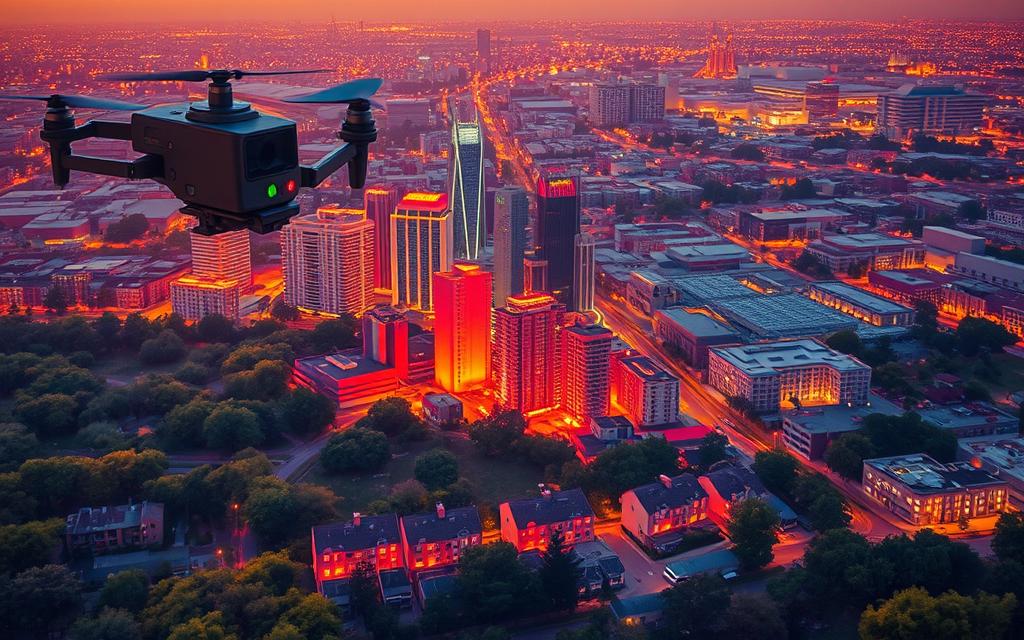
Defence and Security Implementation
Military FLIR applications are key for night missions and spotting threats. They let border patrols see huge areas in the dark. Urban teams use portable cameras to find people through smoke or leaves.
The American Civil Liberties Union has talked about privacy issues. This has led to new features that respect people’s rights.
Industrial Maintenance Solutions
Thermal imaging changes how we do maintenance in factories:
- It finds hot spots in HV substations
- Checks if pipeline insulation works well
- Finds electrical problems before they cause big issues
This way, factories can cut downtime by up to 45%, reports say.
Building Diagnostics and Energy Audits
Contractors use thermal building surveys to meet energy standards. Infrared scans show problems like:
- Moisture in roofs
- Leaks in HVAC systems
- Gaps in insulation
These checks help save up to 30% on energy costs.
Medical Thermography Advances
The NHS is testing thermal imaging for early breast cancer detection. It’s used alongside mammograms. It also helps with other health issues, like checking blood flow and finding inflammation in arthritis.
Wildlife Conservation Efforts
FLIR drones help track rhinos and stop poachers in Africa. They find animals in thick forests with 90% accuracy. This is better than counting them by hand.
Selecting Appropriate FLIR Equipment
Choosing the right thermal imaging system is about finding the right balance. It’s about matching the technical specs to what you need in real life. There are four key things to look at to make sure the equipment fits your job.
Resolution and Sensitivity Requirements
The quality of the sensor is key to how well you can spot things. A 640×480 detector gives you crisp thermal imagery. But, higher resolutions might slow down how fast you can see things moving.
The choice between LWIR and MWIR depends on where you’re using it. LWIR works best outside, while MWIR is better for very hot places.
Portability vs Fixed Installations
Handheld units are great for checking things out in the field. But, if you need to see things from above, drone-mounted systems are the way to go. They can reach places you can’t.
Fixed cameras, like the new FLIR A400 and A700 cameras, are perfect for keeping an eye on things all the time. They’re great for security. But, if you’re in aviation, you have to follow strict rules about weight and emissions.
Software Integration Needs
Today’s thermal cameras need to work with analysis software. You should think about:
- How well they stream data in real-time
- If they can work with your SCADA systems
- If they can automatically make reports
Budget Considerations
When thinking about FLIR costs, don’t just look at the price tag. You should also think about:
| Cost Component | Handheld Systems | Fixed Installations |
|---|---|---|
| Annual Calibration | £200-£400 | £500-£1,200 |
| Software Licences | Included | £800+/year |
| Training Costs | £150/hour | £200/hour |
This table shows why the total cost of owning equipment can be much higher than the initial price. It can triple over five years.
Technological Advancements and Future Trends
Thermal imaging systems are changing fast. New tech is making them smarter and more versatile. These updates will open up new uses for FLIR and bring new challenges for engineers.
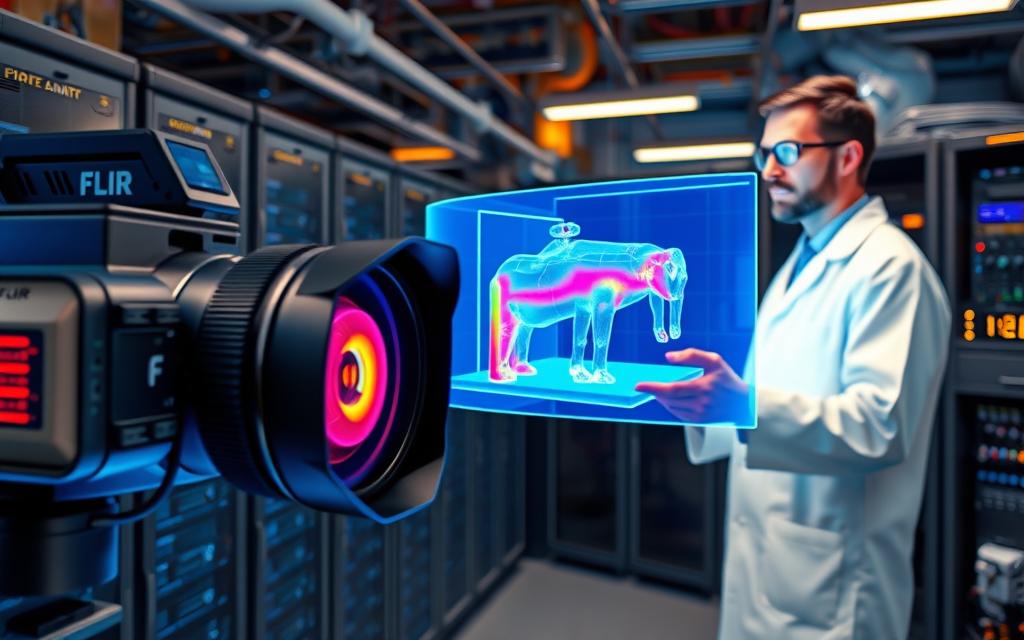
AI-Driven Thermal Analysis
Machine learning algorithms are now key in spotting equipment failures early. They use AI thermal analytics to find overheating parts in machines 43% quicker than humans can. This is thanks to research backed by DARPA.
“Neural networks trained on thermal datasets achieve 92% accuracy in forecasting mechanical breakdowns 72 hours before occurrence.”
Multispectral Imaging Integration
Today’s hyperspectral FLIR systems mix infrared with visible and UV light for better threat detection. These advanced tools are being used at borders to:
- Find hidden organic materials
- Track targets through trees
- Analyse chemical residue
This new tech boosts accuracy by 67% in poor light, beating single thermal cameras.
Miniaturisation Challenges
Making FLIR smaller without losing quality is a big challenge. MEMS sensor trends offer hope, but tiny microbolometer arrays struggle with heat. Engineers are exploring:
- Graphene for cooling
- Modular detector designs
- Active cooling for small devices
Early tests show a 14% improvement in thermal stability in small devices. But, making these devices ready for market is 18-24 months off.
Conclusion
FLIR technology is changing how we work by using non-invasive detection. It helps with precise electrical checks and spotting fires early in businesses. This tech uses advanced algorithms and sensors to improve decision-making in defence, energy, and safety.
Today’s systems are very flexible, working well over 2 km under the right conditions, as FLIR’s specs show. They’re also used by city planners to watch over smart buildings and find energy leaks.
Companies looking for good thermal imaging should think about what they need. FLIR Systems has options that are easy to carry or set up permanently. With AI, these systems can predict when things might break, making maintenance more accurate.
If you need help with using this tech or want to know more about it, talk to a certified FLIR partner. They can help figure out what you need for your specific situation. This tech is key for any mission where seeing clearly is essential.
FAQ
What distinguishes FLIR technology from traditional night vision systems?
FLIR systems use infrared radiation to detect objects based on their temperature. They work in the 7.5–14 μm wavelength range. Unlike night vision, which needs light, FLIR works in total darkness.
FLIR’s special calibration methods make it more accurate. They adjust for how different materials reflect heat.
How did FLIR systems transition from military to civilian use?
FLIR started in the Vietnam War for targeting aircraft. Texas Instruments made it affordable in the 1990s with uncooled microbolometers.
Now, it’s used in firefighting, building checks, and wildlife tracking. Handheld devices like the FLIR C5 make it easy for industrial checks.
Why do FLIR lenses use germanium instead of standard glass?
Germanium is better at infrared transmission than glass. It lets up to 98% of IR in the 8–12 μm range. FLIR’s germanium lenses work well in extreme temperatures.
What are the practical limitations of drone-mounted FLIR systems?
Drones with FLIR, like the FLIR Vue Pro, are good for aerial checks. But, they need big drones for 640×480 resolution sensors. They also can’t fly too high or far without special permits.
How does FLIR address surveillance concerns in public spaces?
The ACLU worries about FLIR’s undetectable surveillance abilities. FLIR cameras can see people through walls in some cases. Modern systems have privacy modes to hide data, but laws vary.
The NHS in Kent hospitals needed patient consent for thermal data use in trials.
What maintenance factors affect FLIR ownership costs?
FLIR systems need NIST-traceable calibration every year (£800–£2,000). Germanium lens replacements cost £1,000–£2,000 every 3–5 years. Users spend 15–20% of the initial cost each year on upkeep.
Vacuum-sealed detectors need special care to avoid damage.
Can FLIR detect electrical faults in live substations?
Yes, utilities use FLIR T-Series cameras for overheated connections in 400 kV substations. They spot temperature changes as small as 0.03°C. FLIR’s Thermal Studio Pro software helps report faults.
How is AI transforming thermal imaging analysis?
FLIR’s ATeC platform uses machine learning algorithms to predict mechanical failures. DARPA-funded research helps detect threats automatically. But, dealing with false positives is a challenge.
What standards govern FLIR use in building energy audits?
ISO 6781-3:2022 sets rules for building envelope assessments with thermal imaging. FLIR cameras must have ≤50 mK noise-equivalent temperature difference. Surveyors must consider how different materials reflect heat for accurate assessments.
Are combined UV/IR systems effective for industrial inspections?
FLIR’s multi-spectral fusion technology, like in the Si124-LD+, finds methane leaks by combining UV and IR. But, it needs cooled detectors, raising costs by 60–80%.
