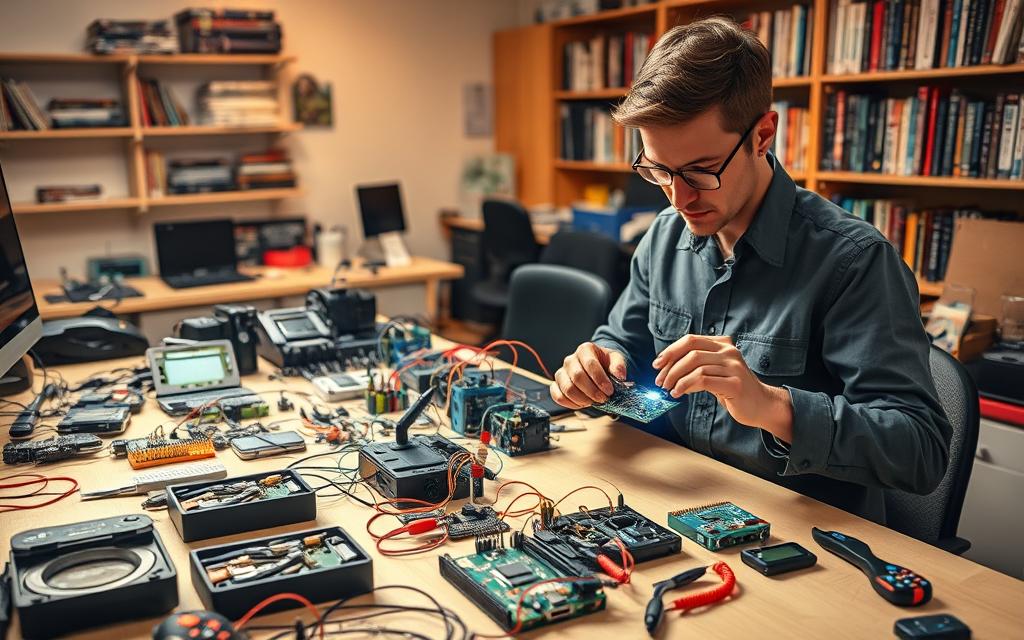
Modern computing needs both strong hardware and well-optimised software for the best performance. Many users don’t know simple tweaks can make a big difference in their digital life.
Hardware hacks like adding an SSD or more RAM can make your system much faster. These changes not only make your device last longer but also speed up your daily tasks.
Software optimisation is key to getting the most out of your system. By setting it up right, you unlock its full power while keeping it safe and stable.
Our guide offers expert tech tips on how to improve both hardware and software. These tips help users boost their computing experience through smart DIY computing methods.
Essential Tools for Effective H Tech Hacks
For successful hardware and software tweaks, you need the right tools. A skilled technician knows that top-notch equipment is key. It ensures smooth operations and avoids system failures.
Investing in quality tools is a must. They keep you safe, efficient, and professional. Both physical tools and digital apps are vital in today’s system management.
Hardware Toolkit Essentials
Physical tools are the base for any hardware work. Without the right gear, even simple jobs can be tough and risky.
Screwdrivers and Anti-static Equipment
Precision screwdrivers are a must for getting into internal parts. Their magnetic tips help pick up screws from tight spots.
Related Posts:





Anti-static wrist straps protect your electronics from static shock. This simple step prevents expensive damage to your parts.
Choosing quality tools means they last longer and work better. Reputable brands offer durability and reliability.
Diagnostic Software Utilities
Software diagnostics find hardware problems early. These tools give you insights into your system’s health and performance.
Apps that monitor temperature stop overheating damage. They warn you when parts get too hot.
Benchmarking software checks your system’s performance. It shows how tweaks improve your system’s speed.
Software Applications for System Management
Digital tools control and improve your system. The right software automates tasks and offers deep insights.
System Monitoring Tools
Apps that monitor in real-time track how your system uses resources. They find bottlenecks and show where to improve.
Network scanning tools like Nmap show what devices are connected. They’re part of any ethical hacking tools set.
Vulnerability assessment software finds security weaknesses. Regular scans keep your system safe and secure.
Automation and Scripting Software
Automation tools save time on routine tasks. Scripting languages let you customise maintenance routines.
Batch files and PowerShell scripts automate complex tasks. They reduce mistakes and ensure consistent results.
Scheduled tasks keep your system healthy without constant manual checks. Automation is key to efficient system management.
| Tool Category | Primary Function | Key Benefits | Popular Examples |
|---|---|---|---|
| Hardware Tools | Physical modifications | Direct component access | Precision screwdrivers, anti-static mats |
| Diagnostic Software | System analysis | Issue identification | Temperature monitors, benchmark tools |
| Monitoring Applications | Performance tracking | Real-time insights | Nmap, resource monitors |
| Automation Tools | Task simplification | Time efficiency | Scripting languages, batch processors |
Creating a strong cybersecurity toolkit needs both hardware and software. Each type has its role in managing and protecting your system.
Keeping your tools up to date is essential. It ensures they work well against new threats. Staying current means you get the latest features and security fixes.
Choosing the right tools is critical for success. Quality equipment and software are worth the investment. They deliver reliable performance.
Optimising Hardware Performance with H Tech Hacks
Boosting your system’s performance starts with key hardware upgrades. These upgrades lead to faster and more reliable use of your devices. They are vital for anyone looking to get the most out of their tech.

Upgrading Components for Better Efficiency
Upgrading your hardware is the best way to see real improvements. Swapping old parts for new ones can make your system feel like new again. This approach saves you from the cost of buying a whole new device.
Installing an SSD for Faster Boot Times
Switching to a solid-state drive (SSD) cuts down on how long it takes to start up and load apps. SSDs work by accessing data electronically, skipping the mechanical delays of traditional hard drives.
Here’s how to install an SSD:
- Back up all important data from your old drive
- Install the SSD using the right brackets
- Use software to copy your system and files
- Set your BIOS to recognise the new drive
- Check everything works right before getting rid of the old drive
After installing an SSD, you can expect boot times to drop by 50-70%. This makes it a top choice for upgrading your system.
Adding RAM for Improved Multitasking
More RAM means your system can handle more tasks at once. With today’s software and browsing habits, you need a lot of memory. Older systems might not have enough.
Here’s what to consider for a RAM upgrade:
- Make sure it fits your motherboard
- Match the type and speed of your current RAM
- Put new modules in the right slots for best performance
- Run memory tests after installing
This upgrade is great for those who work with big files or have lots of tabs open.
Cooling Solutions to Prevent Overheating
Good cooling keeps your system running smoothly and safely. It stops overheating and helps your hardware last longer. The right cooling keeps your system running well, even when you use it a lot.
Cleaning Fans and Heat Sinks Regularly
Dust is the main cause of overheating. Keeping your system clean stops dust from blocking airflow and trapping heat. Regular cleaning is key to avoiding overheating.
Here’s how to keep your system cool:
- Use compressed air to clean fans and heat sinks
- Use soft brushes for tough spots
- Clean intake filters every month if you’re in a dusty area
- Check fans for wear and replace them if they’re noisy
Clean systems run 5-10°C cooler under load than dirty ones.
Applying High-Quality Thermal Paste
Thermal paste fills gaps between components and coolers, improving heat transfer. Using top-notch thermal paste ensures your system stays cool, even when it’s working hard.
Here’s how to apply thermal paste like a pro:
- Clean the old paste off with isopropyl alcohol
- Put a small amount of premium paste on the processor
- Mount the cooler carefully to spread the paste evenly
- Secure the cooler with even pressure
High-quality thermal paste can improve cooling by 15-20% compared to standard ones. This makes your cooling solutions much more effective.
Software Tweaks for Enhanced Functionality
Upgrading your hardware can make a big difference. But, making software changes can also boost your computer’s performance. These digital tweaks can make your computer work better without changing anything physical.
https://www.youtube.com/watch?v=-PLOWRNm2dY
Operating System Customisations
Your operating system is the base of your computer. Making smart OS customisation changes can make your computer faster and more efficient.
Adjusting Windows Settings for Optimal Performance
Windows systems can be tweaked for better performance. Start by going to System Properties and turning off visual effects. This makes your computer run faster.
Change your power plan to High Performance when plugged in. This stops your CPU from slowing down. Also, clean up your disk regularly to keep your computer running smoothly.
If you know a lot about computers, you can edit the Registry. But, always back up your Registry first to avoid problems.
Utilising Linux Command Line Tools
Linux gives you control through the terminal. The ‘top’ command lets you see what’s happening in real time. ‘htop’ shows you more details about how your computer is using resources.
To improve memory use, adjust swappiness:
- Check current value: cat /proc/sys/vm/swappiness
- Temporarily change: sudo sysctl vm.swappiness=10
- Make permanent: add vm.swappiness=10 to /etc/sysctl.conf
Use cron jobs for regular tasks. These automated scripts can handle things like cleaning up logs and updating packages without you having to do it.
Application-Specific Optimisations
Many programs have settings that can make a big difference. Knowing how to use these settings can make your computer work better for you.
Configuring Browser Settings for Speed
Browsers use a lot of resources. To make them faster, limit background processes and manage extensions well. Turn off auto-play for videos and animations to save CPU.
Adjust your cache settings to find a balance between storage and speed. Use content blockers to stop ads from slowing down your browsing.
Clear your browsing data often and consider using simpler browsers for everyday tasks. These small changes can make browsing faster and smoother.
Optimising Graphics Software Preferences
People who use graphics software like Adobe Photoshop or Blender can get big performance boosts. Give graphics apps more RAM when working with big files.
Set your scratch disk to your fastest drive. This makes temporary file operations faster during editing.
Adjust rendering settings to match your computer’s capabilities. Turn off visual previews and use GPU acceleration when you can. These changes help your workflow and reduce wait times.
Security Enhancements Through H Tech Hacks
In today’s digital world, strong security is key. It’s as important as making your tech better. Without it, all your hard work can be undone quickly.
Good security hacks keep your hardware and digital stuff safe. They create strong defences against cyber threats.

Hardware-Based Security Measures
Physical security is your first defence. It’s stronger than software alone.
Setting Up BIOS/UEFI Passwords
BIOS/UEFI passwords stop unwanted access. They block changes to your system settings.
To set one up, restart your computer. Then, enter BIOS/UEFI settings. Go to security and make a strong password. Pick something you can remember but is hard to guess.
“Hardware-level security provides the foundation upon which all other protective measures are built. Without it, you’re building a fortress on sand.”
Using Hardware Security Keys
Hardware security keys fight off phishing and account takeovers. They need to be there in person to work.
They support FIDO2 and U2F protocols. This means they work with lots of online services and operating systems.
YubiKey and Google Titan are top choices. They offer strong encryption and are built to last. Investing in these is a smart move.
Software Security Protocols
While hardware keeps physical access safe, software fights digital threats. Using both gives you full protection.
Implementing Firewall and Antivirus Settings
Firewalls control who gets in and out of your system. They have rules for apps and can spot intruders.
Windows Defender Firewall is a good start. For more, try GlassWire or TinyWall. They offer better monitoring and control.
Keep your antivirus up to date. Run daily scans and have real-time protection for ongoing security.
Enabling Two-Factor Authentication
Two-factor authentication adds a layer of security. It needs something you know and something you have.
Most services offer 2FA through apps or SMS. Microsoft Authenticator and Google Authenticator work well across devices.
For the best security, use 2FA with hardware keys. This stops both remote and physical attacks.
| Security Measure | Protection Level | Ease of Implementation | Cost Factor |
|---|---|---|---|
| BIOS/UEFI Passwords | High (Physical Access) | Moderate | Free |
| Hardware Security Keys | Very High | Easy | £20-£60 |
| Firewall Configuration | Medium-High | Moderate | Free-Premium |
| Two-Factor Authentication | High | Easy | Free |
These security hacks build a strong defence against threats. Keep your systems updated and stay alert to new dangers.
Security is an ongoing effort, not just a one-time thing. Check your security every month to keep up with new threats.
Improving System Boot and Load Times
Waiting for your computer to start up can feel like an eternity. But, with these boot time reduction tips, you can make it much faster. Both hardware and software tweaks can make a big difference.
Reducing Boot Time with Startup Management
Good startup management means stopping programmes from running automatically. This simple step can make your computer start up much quicker.
Disabling Unnecessary Startup Programmes
Windows Task Manager lets you control what starts up with your computer. Just right-click your taskbar and choose “Task Manager”. Then, go to the Startup tab and turn off programmes you don’t need.
Be careful when choosing what to disable. Tools that run in the background and check for updates can slow things down. Turning them off can make your computer start up a lot faster.
Using Fast Boot Options in BIOS/UEFI
Modern computers have fast boot options in their BIOS or UEFI settings. This feature skips some checks during startup, saving you a few seconds.
To find these settings, press Delete or F2 when your computer starts up. Look for the Fast Boot option and turn it on. Just remember, this might affect how your computer finds hardware.
Optimising Application Launch Speeds
How fast programmes start up can really make a difference. These tips will help your favourite apps launch almost instantly.
Preloading Frequently Used Applications
Windows SuperFetch learns what you use most and loads it into memory. This application optimisation means your programmes are ready to go when you need them.
Make sure SuperFetch is turned on in your system services. You can find this in Administrative Tools. Check that it’s set to Automatic startup type.
Utilising RAM Disk for Temporary Files
A RAM disk is a virtual storage area in your system’s memory. It’s much faster than regular storage, so accessing temporary files is almost instant.
Tools like SoftPerfect RAM Disk make it easy to set up these virtual drives. Tell your web browser and apps to use the RAM disk for temporary files and cache.
This makes loading web pages and documents much quicker. It’s really noticeable when dealing with big files or complex apps.
Network Performance Hacks
Getting better internet needs smart hardware and software tweaks. These changes can make your online life better, whether you’re gaming, streaming, or working.

Improving your network means knowing about both physical and digital parts. The right mix can cut down on lag, reduce buffering, and keep speeds steady.
Hardware Upgrades for Better Connectivity
Physical parts are key to your network’s power. Upgrading important hardware can really boost performance.
Installing a High-Speed Router
Modern routers support new standards like Wi-Fi 6 and mesh networking. A good router spreads signals well across your space.
Look for routers with many antennas and beamforming. These features send signals directly to your devices, not everywhere.
Here are some router specs to consider:
- Dual or tri-band functionality
- Gigabit Ethernet ports
- MU-MIMO technology
- Quality of Service (QoS) features
Using Ethernet Over Wi-Fi for Stability
Wired connections are often better than Wi-Fi for stability. Cables avoid wireless problems like interference and signal loss.
Ethernet offers:
- Lower latency for real-time apps
- Consistent speeds, no matter the distance
- More security because you need physical access
- Reliability for important business tasks
For devices that don’t move, like desktops or media players, Ethernet is the best choice. It’s more stable than wireless.
Software Adjustments for Network Speed
Software tweaks can also boost your network. These changes are easy and can make a big difference.
Changing DNS Settings for Faster Access
Your Domain Name System (DNS) turns web addresses into IP addresses. ISP DNS servers often focus on cost, not speed.
Using faster public DNS services can speed up browsing. Good options include:
- Google Public DNS (8.8.8.8, 8.8.4.4)
- Cloudflare DNS (1.1.1.1, 1.0.0.1)
- OpenDNS (208.67.222.222, 208.67.220.220)
Try different DNS settings to find the fastest one for you. Many people see faster page loads after changing their DNS.
Configuring Quality of Service Settings
Quality of Service (QoS) technology prioritises certain network traffic. This ensures important apps get more bandwidth.
Good QoS management handles:
- Video streaming needs
- Online gaming latency
- VoIP call quality
- File download priorities
Most routers have QoS features in their settings. Setting it up right stops big apps from slowing down your network.
Using both hardware and software tweaks together is the best way to improve your network. This approach leads to the biggest performance gains.
Troubleshooting Common Hardware Issues
Keeping your system in top shape stops most problems before they start. Good troubleshooting mixes knowing how to diagnose with steps to prevent issues. This guide helps you find and fix common hardware problems and avoid them in the future.
Diagnosing and Fixing Component Failures
Spotting the problem first is key to fixing it. Start by testing each part carefully to find the faulty one. This saves time and avoids replacing things that aren’t broken.
Testing Power Supply Units
Power supply issues often show up as sudden shutdowns or not booting up. Here’s how to test your PSU:
- Take the PSU out of all connections and the motherboard
- Use a PSU tester or a paperclip to check if it works
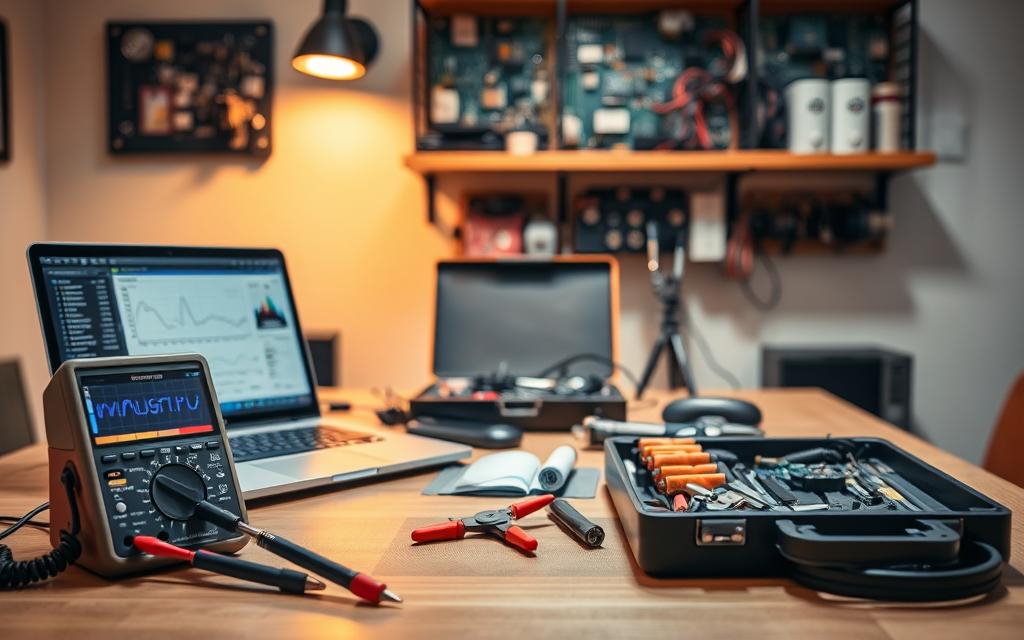
- Check the voltage with a multimeter for accurate readings
- Compare what you find with what the maker says it should be
Tools like thermal cameras can spot overheating parts before they fail. Testing your PSU regularly is a key part of keeping your system running smoothly.
RAM problems usually cause blue screens, apps crashing, or the system being unstable. Here’s how to replace RAM:
- Run a memory test to find bad modules
- Turn off and unplug everything
- Ground yourself to avoid damaging parts with static
- Take out the old modules by releasing the clips
- Put in new modules until the clips click
After replacing RAM, do a long test to make sure it’s stable. Doing RAM replacement right keeps your system running well for a long time.
Preventative Maintenance Techniques
Regular care cuts down on hardware failures and makes parts last longer. Set up regular checks instead of waiting for problems. This way, you avoid downtime and save on repair costs.
Regular Cleaning Schedules
Dust makes things hot and parts wear out faster. Clean your system every three months with these steps:
- Use compressed air to get dust out of fans and heat sinks
- Clean contacts with isopropyl alcohol and soft cloths
- Check cables for damage while cleaning
- Keep track of when you cleaned and what you found
Cleaning regularly keeps air flowing and stops parts from getting too hot. It’s a simple way to keep your system running smoothly.
Monitoring Hardware Health with Software
Today’s tools give you real-time info on how your hardware is doing. Use these software tools to keep an eye on your system’s health:
- Tools that watch temperature help prevent overheating
- SMART tools predict when storage devices might fail
- Load testing software shows when performance drops
- Alert systems tell you about problems before they get worse
Good monitoring lets you fix small issues before they become big problems. Use software and physical checks together for the best system care.
These steps help keep your system running smoothly and reduce unexpected downtime. Regular checks on your hardware are the best way to keep your computer running well for a long time.
Advanced H Tech Hack Techniques
For those who want to get the most out of their systems, advanced techniques can help. These methods need careful use but can greatly improve performance.
Overclocking for Maximum Performance
Overclocking is a top way to boost your hardware’s power. It means running your processor or graphics card faster than it was made to.
Safe Overclocking Practices for CPUs
When overclocking CPUs, it’s important to do it right to keep your system stable. Start by going into your BIOS or UEFI settings when your computer first starts up.
Here are key steps for safe CPU performance boosts:
- Slowly increase clock speeds a little at a time
- Use software to watch temperature levels
- Test your system after each change
- Make sure it’s cool enough
Keep voltage increases small to avoid damaging your processor. Good thermal paste and coolers help with heat during overclocking.
GPU Overclocking for Gaming and Rendering
Overclocking your GPU can make games run smoother and render faster. Most modern graphics cards come with software for this.
Important things to consider for GPU overclocking are:
- Know your card’s heat limits
- Change core and memory clocks separately
- Use benchmarks to check stability
- Watch for visual problems during stress tests
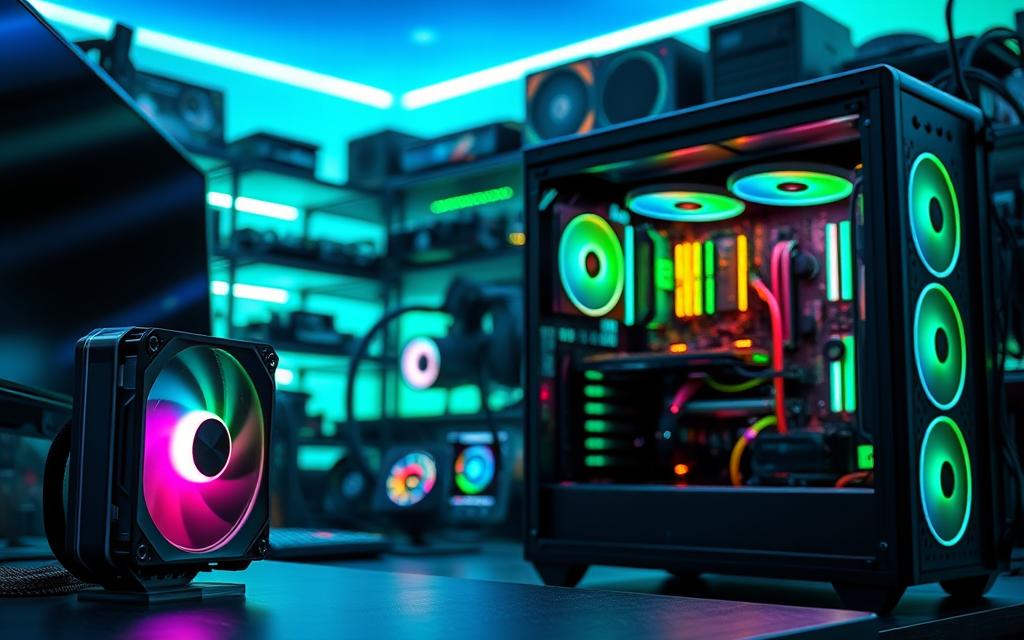
Every graphics card is different, even in the same model. Be patient and test carefully for the best results.
Automation and Scripting for Efficiency
Software automation is also key for making your system work better. It saves time and reduces the need for manual work.
Creating Batch Scripts for Repetitive Tasks
Batch files are a simple way to automate tasks. They run a series of commands with just one click or on a schedule.
Batch scripting is useful for:
- Organising and cleaning files
- Installing software in order
- Backups
- Changing system settings
Even with basic knowledge, batch scripting can save a lot of time for common tasks.
Using Task Scheduler for Automated Maintenance
The Windows Task Scheduler is great for automating maintenance tasks. It lets you schedule various operations without extra software.
Here are some good uses for the task scheduler:
- Regular disk cleaning and defragmentation
- Running virus scans when you’re not using the computer
- Scheduling system updates and restarts
- Starting apps at set times
Setting up your task scheduler right keeps your system running smoothly without needing to watch it all the time. This is a sign of professional system management through smart automation.
Conclusion
This detailed h tech hack summary shows how making smart changes can boost both hardware and software. It covers everything from must-have tools to advanced tweaks. These tips help keep your systems running smoothly and safely.
Key points include the need for regular upkeep, smart upgrades, and strong security. Using these h tech hacks can make your systems faster, improve network connections, and extend hardware life. They also keep your systems safe from threats.
As tech keeps getting better, it’s vital to keep up with new trends. Sites like Gadget Hacks share the latest techniques and tools. Learning continuously helps keep your h tech skills sharp in a fast-changing world.
Start using these proven methods to make your systems better today. Regular checks and updates are key. This way, your hardware and software will work at their best, staying safe and reliable.
FAQ
What are the essential hardware tools needed for effective h tech hacks?
You’ll need precision screwdrivers and anti-static gear like an anti-static wrist strap. These tools help prevent damage when upgrading. They keep sensitive parts safe from electrostatic discharge.
Which software applications are recommended for system management in h tech hacking?
Use tools like HWMonitor to track system performance and temperatures. MemTest86 is great for testing RAM. Python is good for automating tasks. Nmap helps with network security and performance.
How can upgrading components like SSDs and RAM improve system efficiency?
SSDs make boot times faster and data access quicker. More RAM means you can run more apps at once. These upgrades boost your system’s speed and productivity.
What cooling solutions are advised to prevent hardware overheating?
Clean fans and heat sinks regularly to remove dust. Use high-quality thermal paste for CPU or GPU maintenance. These steps help keep your hardware cool and running well.
Can operating system customisations really enhance software performance?
Yes, tweaking Windows settings can free up resources. On Linux, command-line tools offer more control. This leads to smoother operation and better task management.
What are some application-specific optimisations for better performance?
Disable extensions and clear cache in web browsers for faster loading. In Adobe Photoshop, adjust memory settings and use GPU acceleration for faster rendering.
How do hardware-based security measures protect against physical threats?
BIOS or UEFI passwords prevent system access. Hardware security keys add extra protection for logging in. These steps are key in preventing tampering or theft.
What software security protocols are essential for thwarting cyber threats?
Strong firewall settings, updated antivirus, and two-factor authentication (2FA) are musts. They protect against malware, phishing, and unauthorised access, following professional security standards.
What techniques can reduce system boot time effectively?
Disable unnecessary startup programs and enable fast boot options. These changes ensure only essential services start up quickly.
How can network performance be improved through hardware and software hacks?
Upgrade to a high-speed router or use Ethernet for stability. Tweaks like faster DNS servers can also reduce latency. These steps improve network efficiency at home and work.
What are the best practices for troubleshooting common hardware issues?
Diagnose components with a multimeter and MemTest86 for RAM. Regular cleaning and monitoring with CrystalDiskInfo prevent failures.
Is overclocking safe, and how can it be done responsibly?
Overclocking can increase performance but risks overheating or damage. Use trusted tools like MSI Afterburner or Intel XTU. Monitor temperatures and adjust settings carefully to avoid instability.
How does automation through scripting enhance computing efficiency?
Scripts in Python or Bash automate tasks like file organisation and backups. Task schedulers run these scripts automatically, saving time and effort.
Why is regular maintenance important in h tech hacking?
Maintenance prevents performance drops and security risks. It keeps your system running smoothly, extends component life, and avoids unexpected issues.
