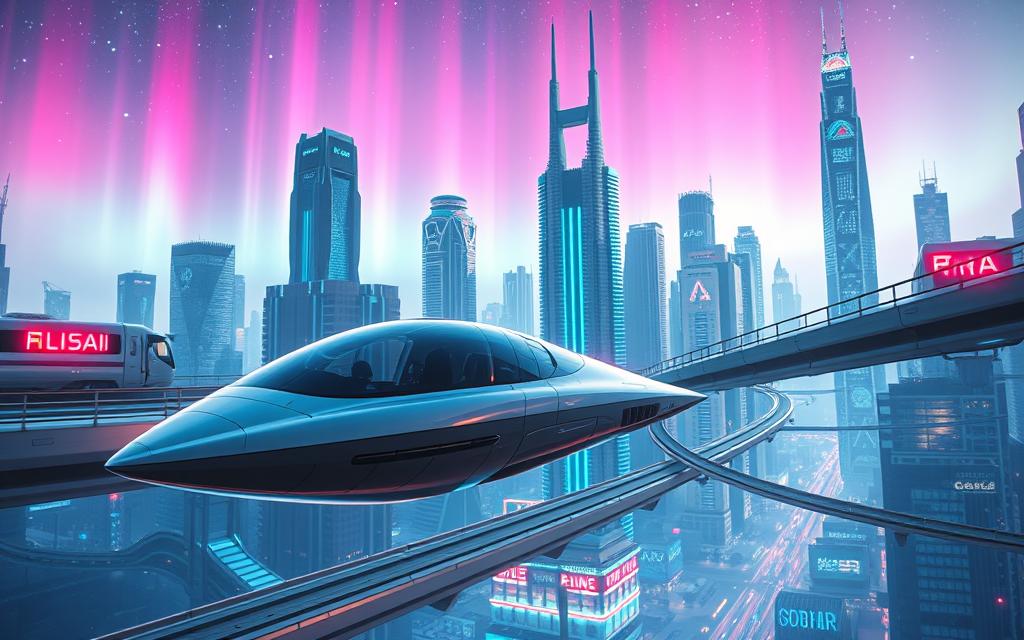
The world is witnessing an unprecedented transformation driven by technology. Industries across the globe are being reshaped by innovative solutions that are redefining traditional business models and creating new avenues for growth.
Technological advancements are not only improving existing processes but also introducing entirely new possibilities. This comprehensive guide will explore the definition and application of technology in today’s context, providing valuable information on its impact across various sectors.
By examining concrete examples of cutting-edge technologies, we’ll gain insight into how they are fundamentally changing the way businesses operate and compete in the modern world.
Understanding What Technology Means in Today’s Context
The term technology has evolved significantly over the centuries, and understanding its current meaning is crucial in today’s fast-paced world. The word “technology” is a combination of the Greek words “technē,” meaning “art, craft,” and “logos,” meaning “word, speech.” It first appeared in English in the 17th century and has since evolved through several meanings to its present-day sense.
The Evolution of Technology Definition
The definition of technology has undergone a significant transformation. Initially, it referred to the discourse on the arts, but over time, its meaning has expanded to encompass the application of scientific knowledge for practical purposes. This evolution in definition reflects the growing complexity and scope of technological advancements.
Technology as Applied Scientific Knowledge
In its modern sense, technology is understood as the application of scientific knowledge to the practical aims of human life. This understanding highlights the crucial relationship between scientific discovery and technological innovation. The table below illustrates how scientific breakthroughs translate into technological applications that transform industries.
| Scientific Breakthrough | Technological Application | Industry Impact |
|---|---|---|
| Advances in Materials Science | Development of New Materials | Aerospace, Construction |
| Understanding of Semiconductor Physics | Microprocessor Technology | Computing, Electronics |
| Genetic Engineering | Biotechnology Products | Healthcare, Agriculture |
The modern understanding of technology emphasizes its role in transforming theoretical scientific knowledge into practical solutions for human problems. This definition helps distinguish technology from pure science while acknowledging their interdependence. As technology continues to advance, its impact on various industries and aspects of life will only continue to grow.
Related Posts:
- Is Metamorph Technologies a Division of Metamorph…

- Understanding What Technology Is: Definition and Examples

- What Do You Know About Information Technology: A Guide

- Exploring What is Technology: Its Meaning & Impact

- New Tech During the Hundred Years War: What Developed

- What Are the Technological Innovations Driving UK Growth?

Artificial Intelligence: The Cornerstone of Modern Technological Revolution
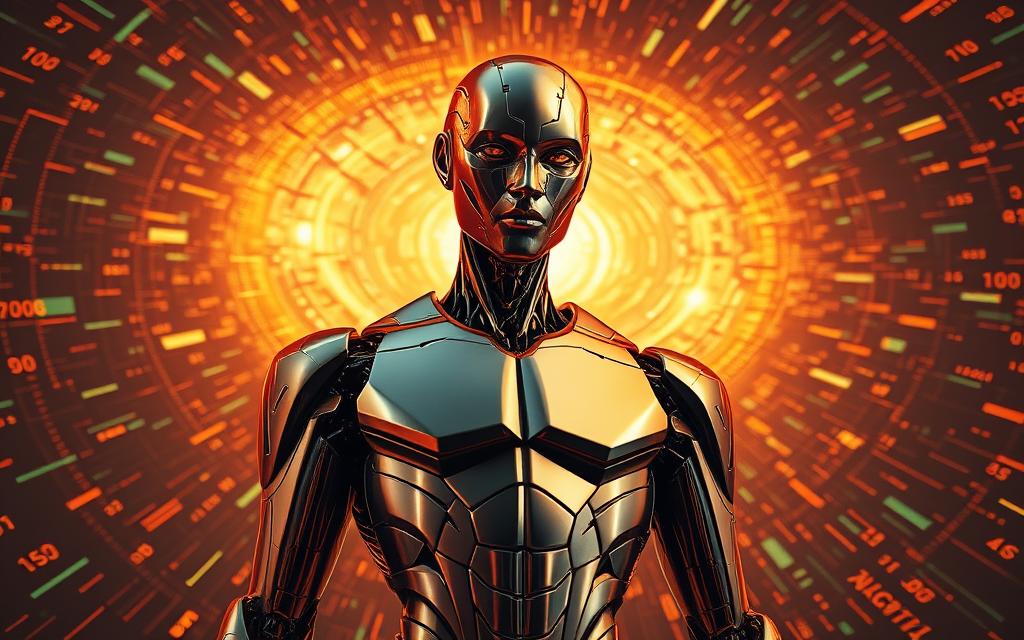
The technological revolution is being driven primarily by advancements in artificial intelligence. As technology continues to evolve, AI stands at the forefront, transforming industries and redefining the future.
Machine Learning and Natural Language Processing
The development of AI has been significantly advanced through machine learning and natural language processing. These technologies enable machines to learn from data, understand human language, and make informed decisions. As stated by experts, “AI is not just about processing information; it’s about making that information actionable.”
Practical Applications Transforming Industries
AI’s impact is being felt across various sectors. In healthcare, AI improves diagnostics and personalized treatment plans. In financial services, it enhances fraud detection and algorithmic trading. Manufacturing benefits from AI-powered predictive maintenance and quality control. As science and technology converge, AI continues to drive advances in multiple fields, providing people and businesses with innovative solutions.
Examples of successful AI deployment can be seen in companies that have integrated AI to gain competitive advantages, showcasing the potential of new technologies in driving information-driven decision-making.
Advanced Manufacturing Technologies Reshaping Production
The advent of advanced manufacturing technologies is changing the face of production. Manufacturing industries produce a wide range of products, from semiconductors to fast fashion, utilizing both traditional processes and newer ones like 3D printing.
3D Printing and Additive Manufacturing
3D printing, also known as additive manufacturing, is revolutionizing the way products are designed and manufactured. This technology allows for the creation of complex geometries and customized products with reduced material waste. As noted in a recent article on different types of information technology, the integration of such technologies is transforming industries.
Smart Factories and Industry 4.0
The concept of smart factories is central to the Industry 4.0 revolution in manufacturing. By integrating IoT sensors, AI, and automation, manufacturers are creating fully connected and flexible production systems. The key benefits include:
- Real-time data analytics for predictive maintenance and quality control
- Improved manufacturing efficiency and reduced downtime
- More agile production processes
- New types of manufacturing jobs and changed workforce requirements
These advancements in technology and manufacturing processes are driving industry forward, enabling companies to produce high-quality products more efficiently.
What Technology is Driving Sustainable Energy Solutions
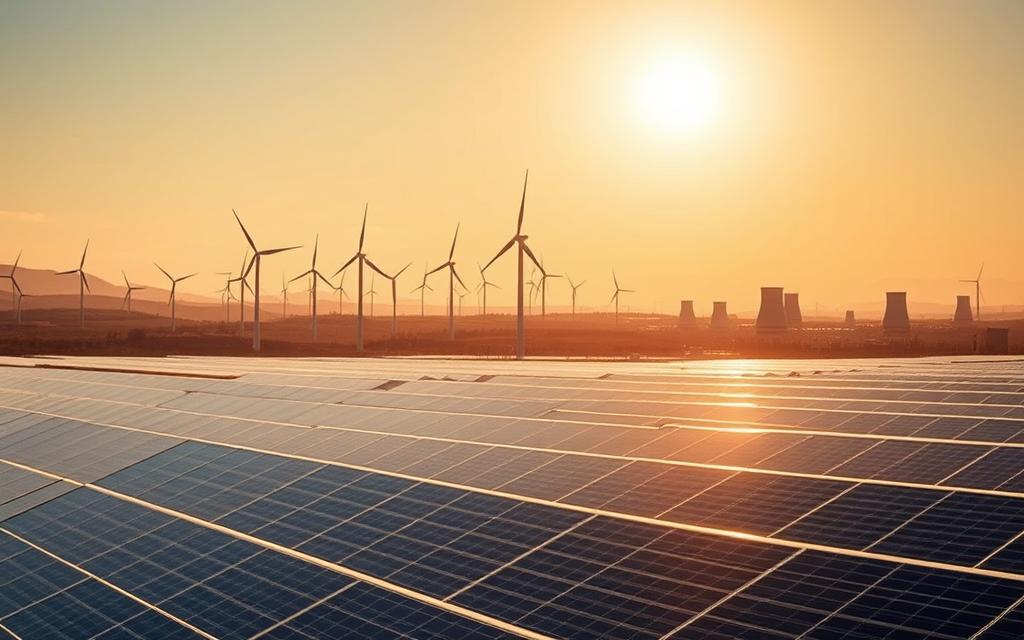
Technological innovations are revolutionizing the energy sector, paving the way for a more sustainable future. The application of sustainable energy technologies is crucial for reducing our reliance on fossil fuels and mitigating climate change.
Renewable Energy Innovations
Renewable energy innovations are at the forefront of sustainable energy solutions. Advances in solar panel technology have significantly improved efficiency, while wind energy is becoming increasingly cost-competitive with fossil fuels. These innovations are driven by scientific knowledge and the use of new materials and designs.
Energy Storage Breakthroughs
Energy storage breakthroughs are critical for the widespread adoption of renewable energy sources. Advances in battery technologies, such as solid-state batteries and improved lithium-ion chemistries, are enhancing energy storage capabilities. Other non-battery storage solutions, including pumped hydro and hydrogen storage, are also being developed to support grid stability and energy independence.
| Energy Storage Technology | Advantages | Applications |
|---|---|---|
| Solid-State Batteries | Higher energy density, faster charging | Electric vehicles, renewable energy systems |
| Pumped Hydro Storage | High capacity, long-duration storage | Grid stability, peak shaving |
| Hydrogen Storage | Zero-emission, flexible energy storage | Power generation, industrial processes |
Communication and Information Technologies Connecting the World
In today’s digital age, communication and information technologies play a pivotal role in global connectivity. The way we communicate, access information, and interact with each other has been revolutionized by these technologies.

5G and Beyond: The New Communication Frontier
The advent of 5G technology is marking a significant leap forward in communication. With its promise of faster data speeds, lower latency, and greater connectivity, 5G is set to enable a new wave of innovations in communication and information exchange. As we move beyond 5G, we can expect even more sophisticated technologies that will further enhance our ability to communicate and share information.
Internet of Things (IoT) Integration
The Internet of Things is creating a world of connected devices and sensors, enabling smart homes, buildings, cities, and industrial facilities through pervasive sensing and control. IoT integration is generating massive amounts of data that can be analyzed for insights and optimization. For instance, IoT is enabling predictive maintenance, resource optimization, and improved decision-making across industries. The evolution of edge computing is also processing IoT data closer to its source, reducing latency and bandwidth requirements.
| Technology | Application | Benefit |
|---|---|---|
| 5G | Faster data speeds, lower latency | Enhanced communication, new innovations |
| IoT | Connected devices, smart infrastructure | Predictive maintenance, resource optimization |
| Edge Computing | Processing data closer to source | Reduced latency, improved efficiency |
For more insights on the current generation of technology, visit TechHack to explore the latest advancements and their implications.
The Future of Revolutionary Technologies
Emerging technologies are poised to reshape the fabric of our society, driving progress and solving complex problems.
The future of revolutionary technologies promises to transform our world in ways we are only beginning to imagine, with convergence across disciplines accelerating the pace of innovation. As we explore emerging technologies like quantum computing, nanotechnology, and biotechnology, we open new frontiers for development and science.
These technologies will help address some of humanity’s most pressing problems, from climate change to disease and resource scarcity. The convergence of multiple technological advances is creating exponential rather than linear progress in many industries, potentially creating entirely new ones over time.
As engineering disciplines evolve to become more interdisciplinary, they will play a crucial role in shaping the future of technology and its application in various industries, ultimately enhancing the way people live and interact with information on the web.
FAQ
What does the term "new technologies" encompass?
The term “new technologies” refers to the latest advancements in various fields, including artificial intelligence, 3D printing, and renewable energy innovations. These emerging technologies are transforming industries and revolutionizing the way we live and work.
How is scientific knowledge applied in modern technology?
Scientific knowledge is applied in modern technology through the development of innovative tools and processes. For instance, machine learning and natural language processing are being used to improve manufacturing efficiency and enhance customer experience.
What is the significance of Industry 4.0 in manufacturing?
Industry 4.0 represents the integration of smart factories and advanced manufacturing technologies, enabling real-time monitoring and optimization of production processes. This leads to increased productivity, reduced costs, and improved product quality.
How is energy storage being revolutionized?
Energy storage is being revolutionized through breakthroughs in battery technology and other innovative solutions. These advancements are enabling the efficient storage of renewable energy, reducing our reliance on fossil fuels and mitigating climate change.
What is the role of 5G in modern communication?
5G represents the latest generation of wireless communication technology, offering faster data transfer rates, lower latency, and greater connectivity. This enables seamless communication, enhanced mobile experiences, and supports the growth of IoT applications.
How is the Internet of Things (IoT) being integrated into various industries?
IoT is being integrated into various industries through the use of connected devices, sensors, and data analytics. This enables real-time monitoring, predictive maintenance, and optimized processes, leading to increased efficiency and reduced costs.
